

What the trials say: the seaweed extract behind AlgaeVital
AlgaeVital is made from a liquid extract of the North Atlantic brown seaweed Ascophyllum nodosum by Acadian in Canada. Below are five trials in which this same extract was tested, from university research groups and from Acadian’s own research centre. Each lists the crop, how it was applied and what was measured. Results depend on crop, climate and management; these are research findings, not a guarantee of results on every farm. The crop photos illustrate each crop and were not taken at the trials.
1. Hydroponic tomato: earlier fruit set and earlier harvest
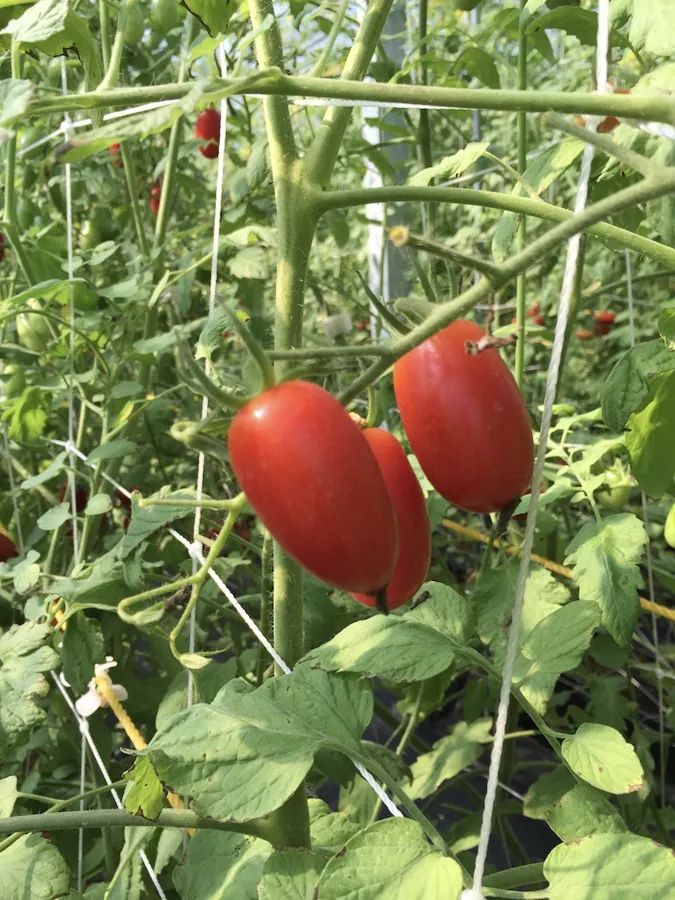
- Who: Acadian Seaplants research centre, Nova Scotia, Canada (Neily et al., 2012, American Society for Horticultural Science annual conference)
- How: greenhouse tomatoes (‘Trust’) in hydroponics; the extract supplied through the irrigation with the standard fertiliser, against fertiliser alone
- Results:
- fruit set in the first 5 weeks after transplanting: +78%
- fruit harvested by week 8: +51% (earlier ripening)
- by week 15: yield +19%, fruit weight +5%
2. Tomato and sweet pepper in the tropics: growth and disease
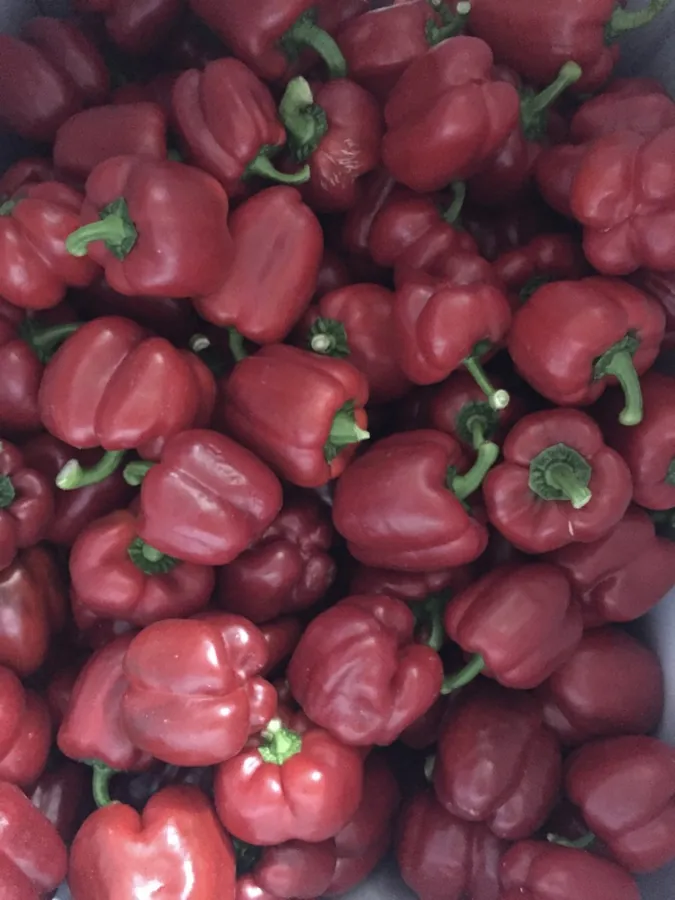
- Who: University of the West Indies, Trinidad (Ali, Ramsubhag & Jayaraman, 2019, PLoS ONE 14(5): e0216710)
- How: 0.5% foliar spray, every 10 days, in the greenhouse and in farmers’ fields; also alternated with a fungicide (two extract sprays, then one fungicide spray)
- Results (greenhouse, against untreated plants):
- plant height +40%, leaf number +50%, dry weight +52%
- root length +59%, chlorophyll +20%
- more flower clusters, flowers and fruit per cluster
- In the field: disease reduced by up to 50%; alternating with the fungicide gave the lowest disease and the highest yield of all treatments
3. Greenhouse cucumber: fewer fungal diseases
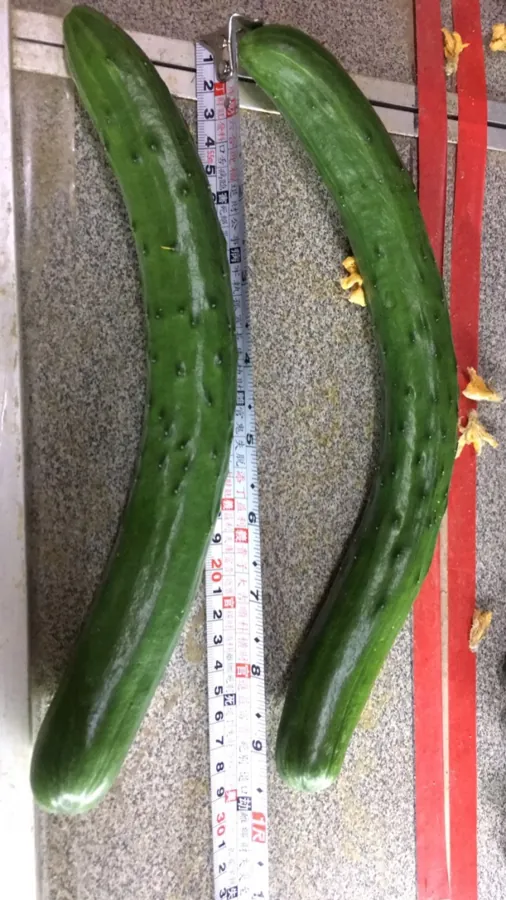
- Who: Simon Fraser University and Acadian Seaplants, Canada (Jayaraman, Norrie & Punja, 2011, Journal of Applied Phycology 23: 353–361)
- How: 0.5% or 1% extract as a foliar spray, a root drench or both, twice, 10 days apart
- Results:
- significantly less disease from all four fungal diseases tested, most of all Alternaria and Fusarium
- spray plus drench worked better than either alone
- alternating with a fungicide was highly effective
4. Ornamental pepper: roots, leaves and flowers
- Who: Bingöl University, Turkey (Özbay & Demirkıran, 2019, Applied Ecology and Environmental Research 17(2): 4361–4375)
- How: 0.25–1.0 ml per litre as a soil drench or foliar spray, every 10 days for 10 weeks after transplanting
- Results (1.0 ml/L against untreated plants):
- plant height 19.2 → 26.4 cm (+38%)
- leaf area 235 → 353 cm² (+50%)
- chlorophyll (SPAD) 50.7 → 58.7 (+16%)
- root fresh weight 5.69 → 7.49 g (+32%)
- flowers 20.9 → 23.6 (+13%)
- Notes: 0.75 ml/L did about as well as 1.0 ml/L, and soil drenching did better than spraying for roots, leaves and chlorophyll
5. Field tomato: fewer culls
- Who: University of Maryland Extension, USA (Brust, 2014)
- How: 2 quarts per acre (about 4.7 L per hectare) to the soil at planting, then a foliar spray every 2 weeks; at full and at 30%-reduced nitrogen
- Results:
- total yield: no significant difference in this trial (a season of unusual weather and heavy disease)
- culls at the first two harvests: about half of the untreated plots (first harvest 0.83–1.0 lb against 1.8–2.6 lb; second 5.2–5.3 lb against 8.9–12.2 lb)
- leaf greenness (SPAD) +18.6%
What this means in the field
- Most consistent: stronger roots, more leaf growth and greener leaves, across very different crops and climates.
- Where it pays: flowering and fruit set, early harvest, and fewer poor-quality fruit.
- On disease: the trials show it works best as part of a programme, alternated or combined with crop protection.
- Yield: gains depend on the season; one field trial in a difficult year saw better fruit quality but no change in total yield.
Biontech recommends using AlgaeVital at key growth stages and before expected stress, together with Biontech’s microbial products for soil and roots. For crop-specific timing and rates, see the AlgaeVital product page or contact Biontech.
Sources
- Neily W, Achenbach J, Shishkov L, Norrie J (2012). Commercial extract from the brown seaweed Ascophyllum nodosum (Stimplex®) improves earliness and yield of hydroponically grown tomatoes. ASHS Annual Conference. Abstract
- Ali O, Ramsubhag A, Jayaraman J (2019). Biostimulatory activities of Ascophyllum nodosum extract in tomato and sweet pepper crops in a tropical environment. PLoS ONE 14(5): e0216710. Article
- Jayaraman J, Norrie J, Punja ZK (2011). Commercial extract from the brown seaweed Ascophyllum nodosum reduces fungal diseases in greenhouse cucumber. Journal of Applied Phycology 23: 353–361. Article
- Özbay N, Demirkıran AR (2019). Enhancement of growth in ornamental pepper (Capsicum annuum L.) plants with application of a commercial seaweed product, Stimplex®. Applied Ecology and Environmental Research 17(2): 4361–4375. Article
- Brust G (2014). Using Stimplex and CaSi in tomato for increased yields and quality. University of Maryland Extension. Report