

Bacillus subtilis Y1336 | BIOBAC WP / BIOSOL SC
A pesticide-grade Bacillus subtilis developed in Taiwan and registered in 15 countries. One strain manages fungal diseases, bacterial diseases and nematodes, and can be used right up to harvest.
| 15 countries | ≥1×10⁹ CFU/g | 5+ years | +29.9% |
|---|---|---|---|
| Registrations | Viable spores | Retained samples still on specification | Tomato yield in a Spanish nematode trial |
Key features
- Broad spectrum: gray mold, powdery mildew, downy mildew, Rhizoctonia and rice blast, as well as bacterial wilt, bacterial leaf blight and citrus canker.
- Proven in the field: in trials in Turkey, Indonesia, China, Taiwan and Vietnam, control matched chemical standards or leading biological brands.
- Nematode management: ranked first overall in a third-party GEP tomato trial in Spain run by Eurofins, with a 29.9% yield increase.
- Safe up to harvest: a microbial product; Turkish trial reports state a pre-harvest interval of 0 days. No phytotoxicity was observed in any trial, and it can be used in organic farming.
- Long shelf life: 3 years at room temperature. Retained samples stored for 5 years 3 months still held more than ten times the specified count.
- Fits spray programs: can be tank-mixed or rotated with most common pesticides within an IPM program.
- Growth promotion: phosphate-solubilizing activity of up to 3,134.9 µg/mL/day, plus enzymes that break down organic matter and help crops take up nutrients.
Modes of action
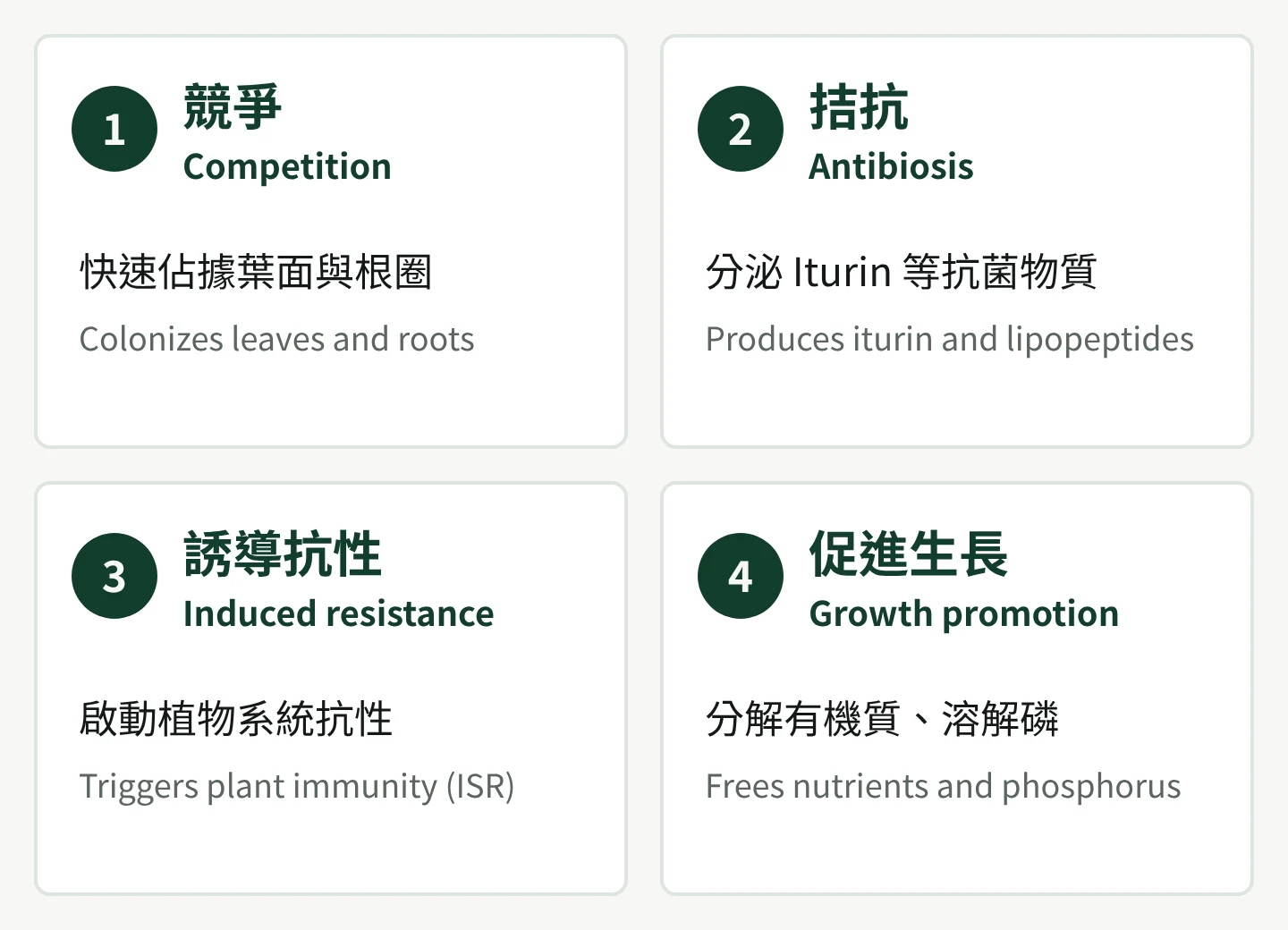
- Competition: multiplies quickly on leaves and in the rhizosphere, occupying the space and nutrients pathogens need.
- Antibiosis: produces lipopeptides such as iturin, surfactin and plipastatin that directly inhibit pathogens.
- Induced resistance: triggers the plant’s own induced systemic resistance (ISR).
- Growth promotion: secretes amylase, protease, cellulase and lipase, and solubilizes insoluble soil phosphorus.
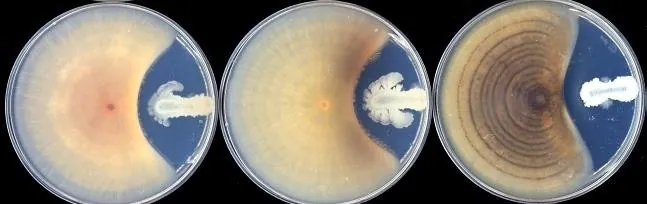
Dual-culture plates: Y1336 on the right clearly restricts each pathogen. Data: Academia Sinica, Taiwan.
Strain data: isolated from Taiwanese soil; deposit number BCRC 910203; Taiwan patent I280852 and US patent US8338160B2. The strain is unrelated to any animal or plant pathogen and does not produce toxins.
Metabolites: iturin and enzymes
Most of Y1336’s disease control and growth promotion comes from the metabolites it produces. Biosol, the liquid product, is unconcentrated fermentation broth that already contains these metabolites, so it acts faster.
Lipopeptides
| Metabolite | Main role |
|---|---|
| Iturin | Disrupts fungal cell membranes and inhibits pathogenic fungi; the core of Y1336’s antifungal activity |
| Surfactin | A natural surfactant that helps Y1336 attach to leaves and roots, form biofilms and induce plant resistance |
| Plipastatin | Inhibits hyphal growth of filamentous fungi, complementing iturin |
From 2014 to 2020 Biontech measured iturin A in 154 batches of spray-dried technical powder as a quality marker. The median across all batches was 5,068 ppm (about 0.5%); from 2016 onward each year’s median held steady between 4,900 and 6,700 ppm.
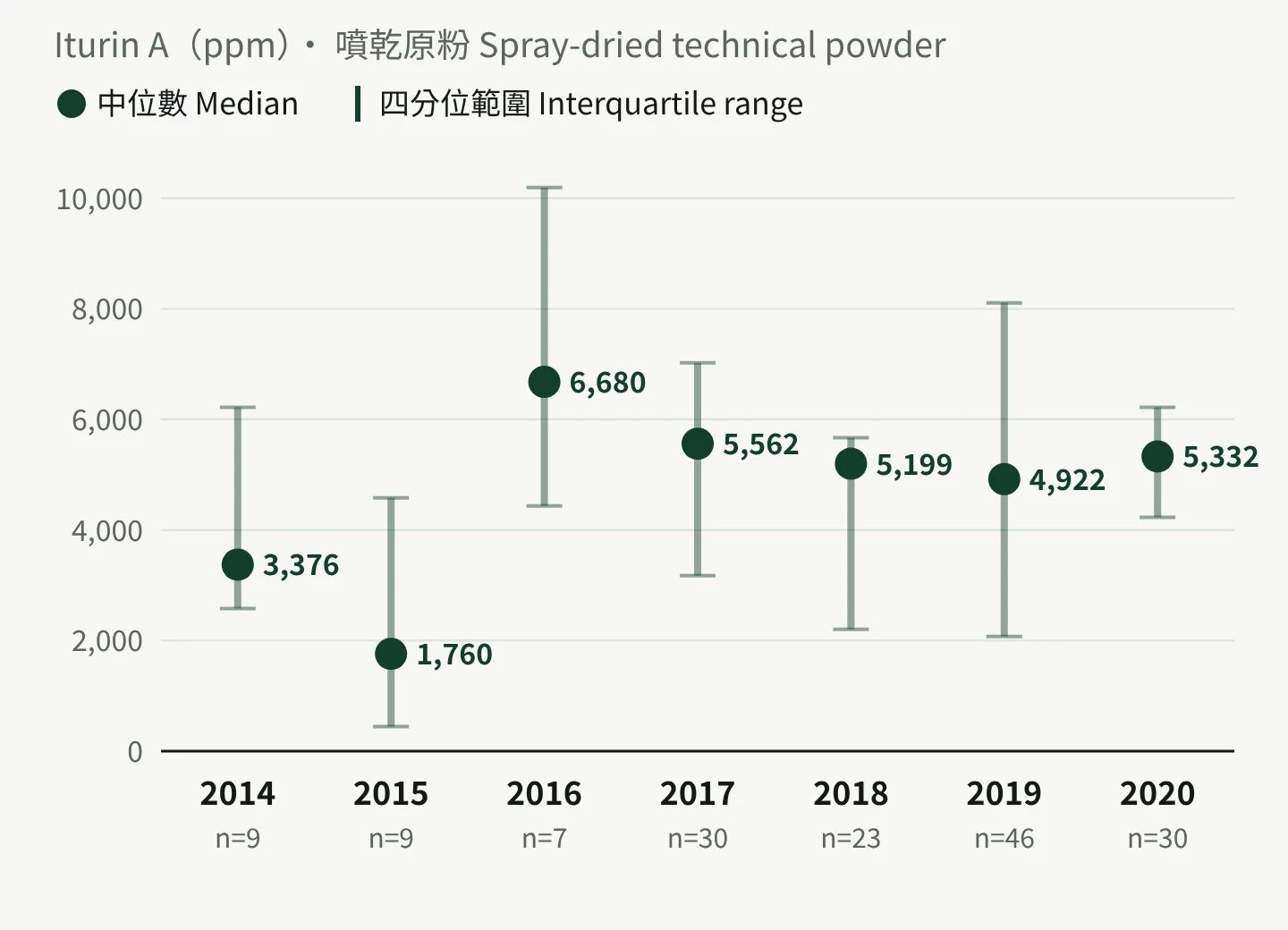
Biontech QC records, 154 batches; dots are yearly medians, lines span the middle 50% of batches.
In a soil test, 16.7–30.5 ppm of iturin was still measurable 30 days after Y1336 was introduced, showing that the strain survives in soil and keeps producing antimicrobial compounds.
Enzymes
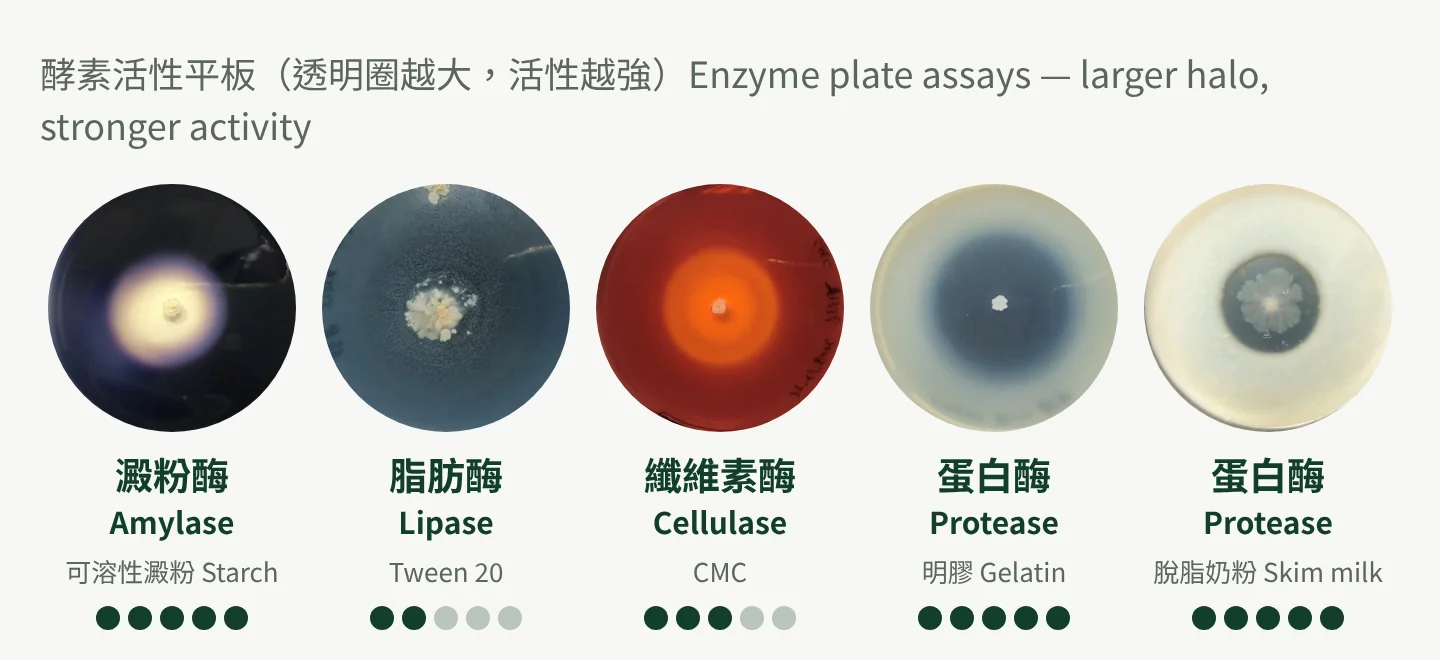
Clear halos show how far each enzyme breaks down its substrate. Y1336 has its strongest amylase and protease activity, breaking down starch and plant and animal proteins in soil into nutrients crops can absorb.
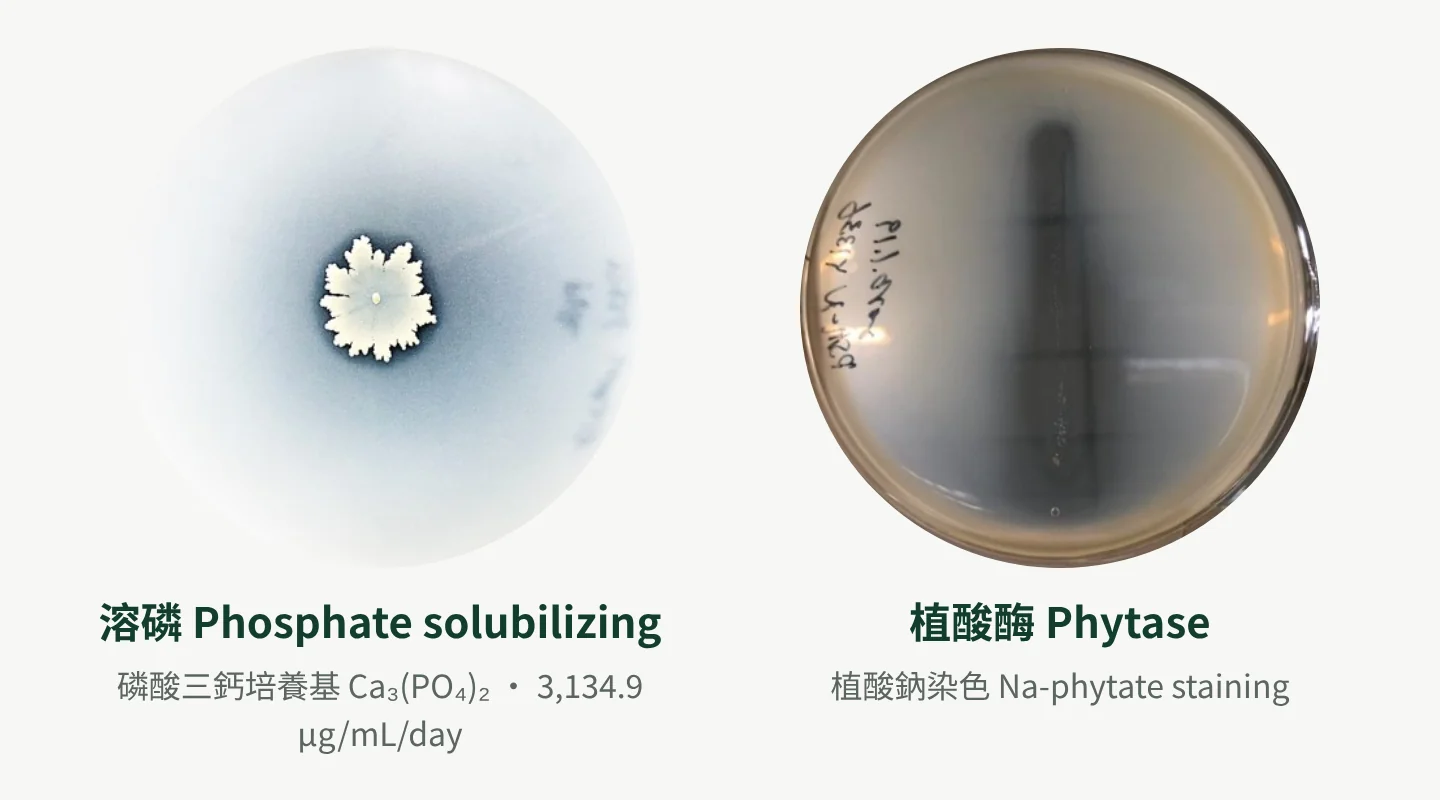
On tricalcium phosphate Y1336 forms a clear solubilizing halo (3,134.9 µg/mL/day) and also grows on aluminium phosphate, iron phosphate and rock phosphate; its phytase releases organic phosphorus from phytate.
Field trials
In seven trials with a reference product—biological brands, copper and antibiotics—Y1336 gave equal or higher control.
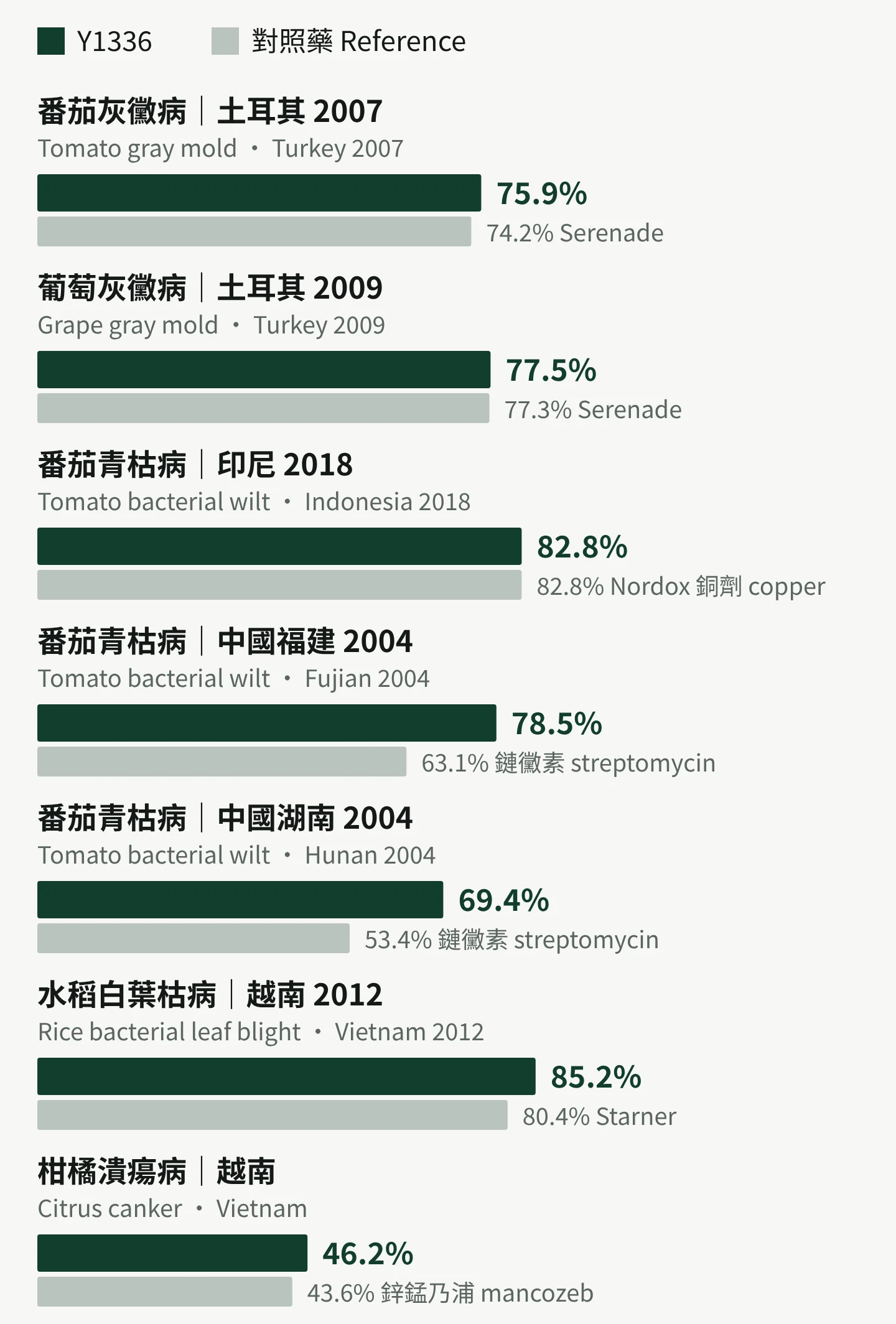
In 7 reference trials, Y1336 matched or beat the standard; Y1336 at the best rate in each trial.
Gray mold
- Tomato gray mold (Ortaca, Turkey, 2007): 125 g/100 L, in the same statistical group as Serenade.
- Grape gray mold (Gaziantep, Turkey, 2009): 125 g/100 L; the report recommends it for organic farming.
Bacterial diseases
- Tomato bacterial wilt (Balitsa, Indonesia, 2018): 2.5 g/L soil drench; yield on par with Nordox and above Funguran.
- Tomato bacterial wilt (Fujian, Zhejiang and Hunan, China, 2004–2005): liquid formulation at 300-fold dilution, 57–100% control.
- Rice bacterial leaf blight (two sites, Vietnam, 2012): controlled at 1.0–1.5 kg/ha.
- Rice bacterial leaf blight (Taiwan): Biosol at 400-fold cut severity from 46.4% to 15.5% and raised yield by 9%.
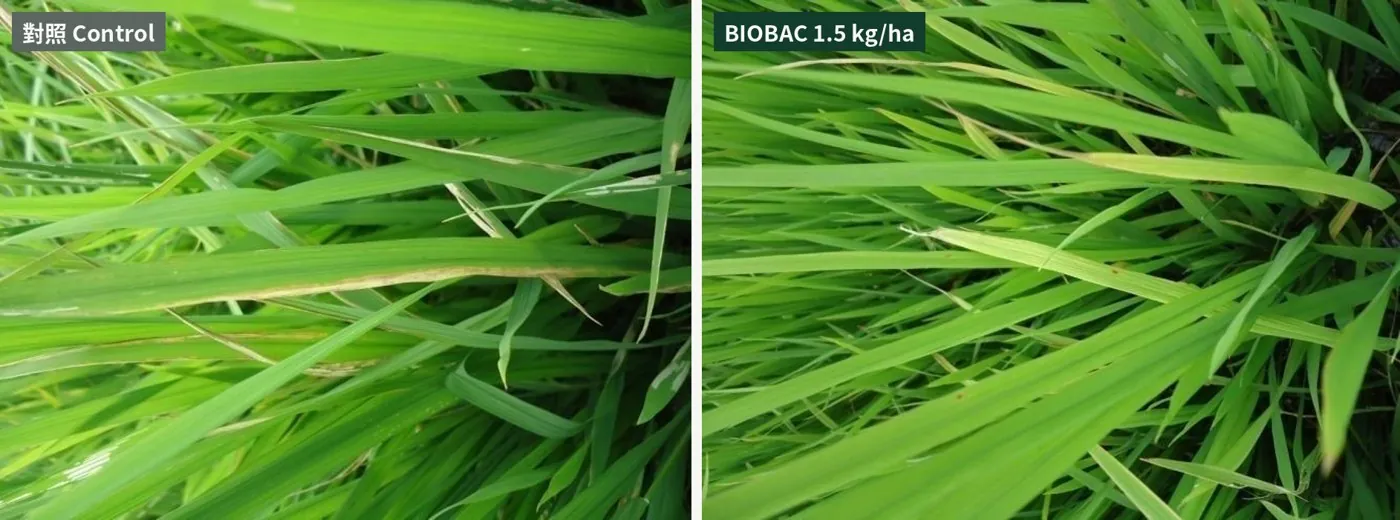
Rice bacterial leaf blight, Vietnam (2012): 10 days after the second application, control (left) and BIOBAC 1.5 kg/ha (right).
Rice and cash crops
- Rice blast (3 sites, National Chung Hsing University, Taiwan, 2018): 400-fold outperformed 5% kasugamycin; 800-fold was equivalent.
- Tea brown blight (3 sites, National Kaohsiung Normal University, Taiwan, 2016–2017): 72–84% control of disease severity at 400-fold.
- Rose powdery mildew (Kenya, 2014): 3 kg/ha matched the chemical standard Baycor.
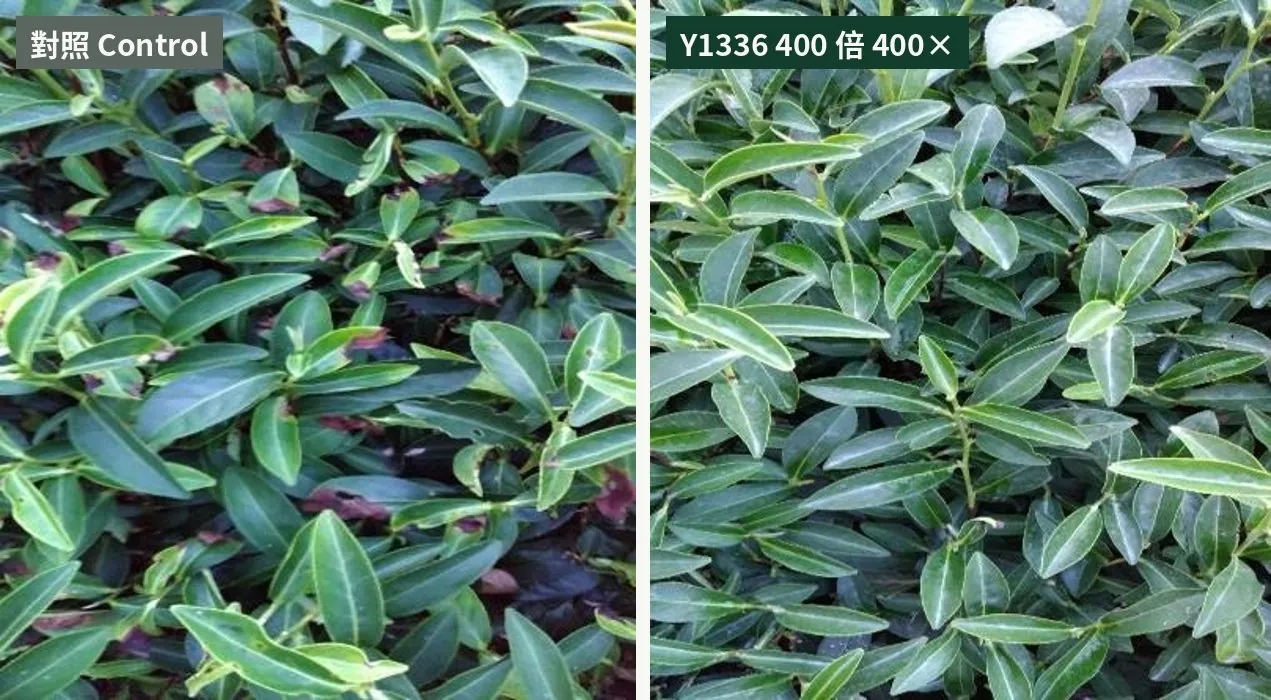
Tea brown blight, Taiwan (2016): 7 days after the fourth application, control (left) and Y1336 at 400-fold (right).
Laboratory and literature
- Sugar-beet damping-off (Morocco, 2022 paper): Y1336 seed coating effectively controlled Rhizoctonia solani.
- Nankai University, China (2020): Biosol at 250-fold inhibited 11 pathogens by 64.7–100%.
Field trials in Vietnam
Vietnam is one of Y1336’s best-documented markets, with official registration trials run by the national pesticide testing centers and large-scale field trials by Arysta Vietnam in 2014–2015.
Official registration trials: equal to or better than the reference in 11 of 12
The Southern and Northern Pesticide Control and Testing Centers (SPCTC, NPCTC) ran four trials each on chrysanthemum bacterial wilt, capsicum bacterial wilt and citrus crown and root rot for BIOBAC registration.
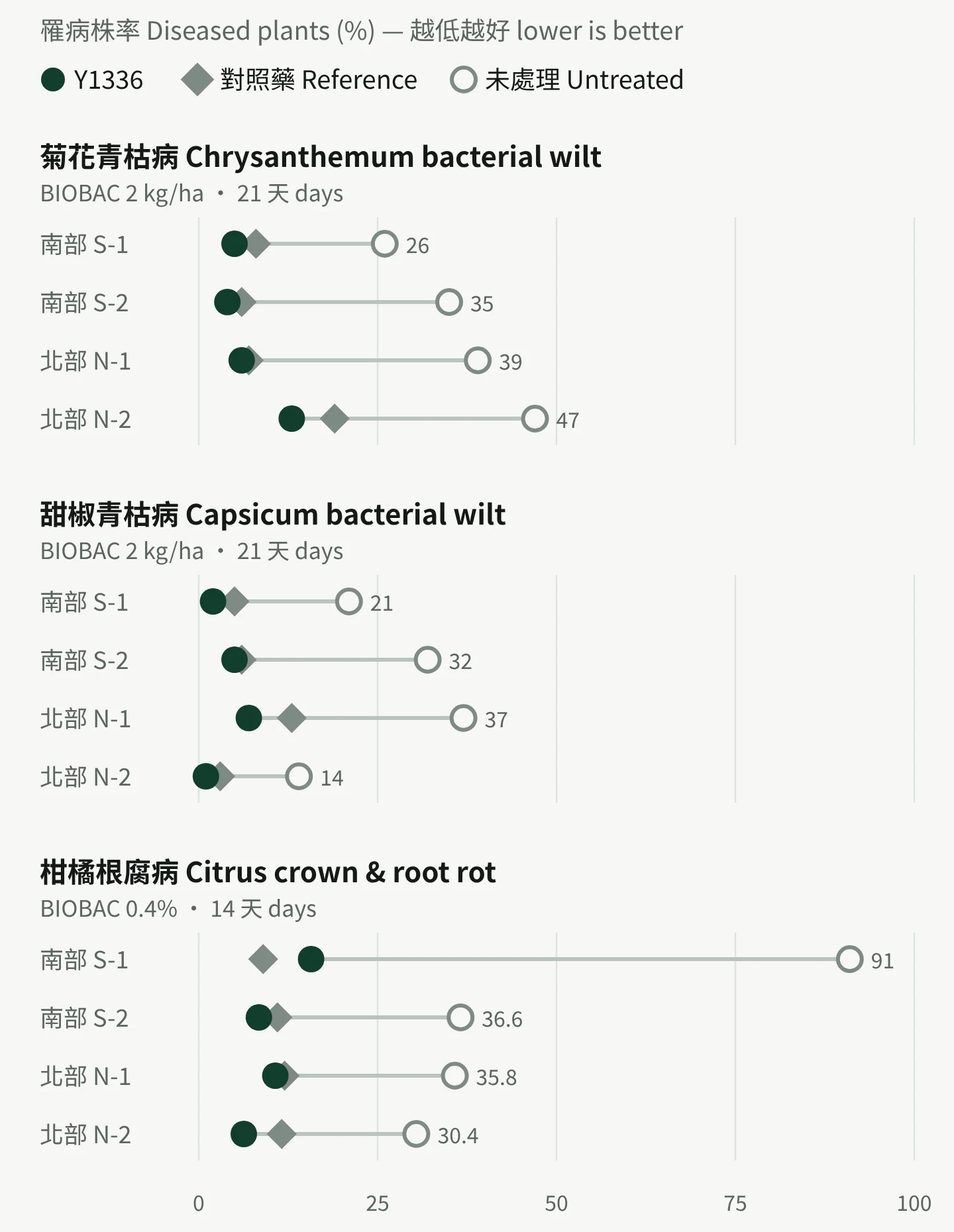
S = Southern center, N = Northern center. Three applications 7 days apart; no phytotoxicity in any treatment.
- Chrysanthemum bacterial wilt: 4–13% diseased plants with BIOBAC 2 kg/ha versus 26–47% untreated; below the references Miksable and Actinovate in all 4 trials.
- Capsicum bacterial wilt: 1–7% with BIOBAC 2 kg/ha versus 14–37% untreated; below the reference Anti-xo in all 4 trials.
- Citrus crown and root rot: 6.3–15.7% with a 0.4% BIOBAC drench versus 30.4–91% untreated; below the reference in 3 of 4 trials.
Arysta large-scale trials: bacterial wilt and clubroot
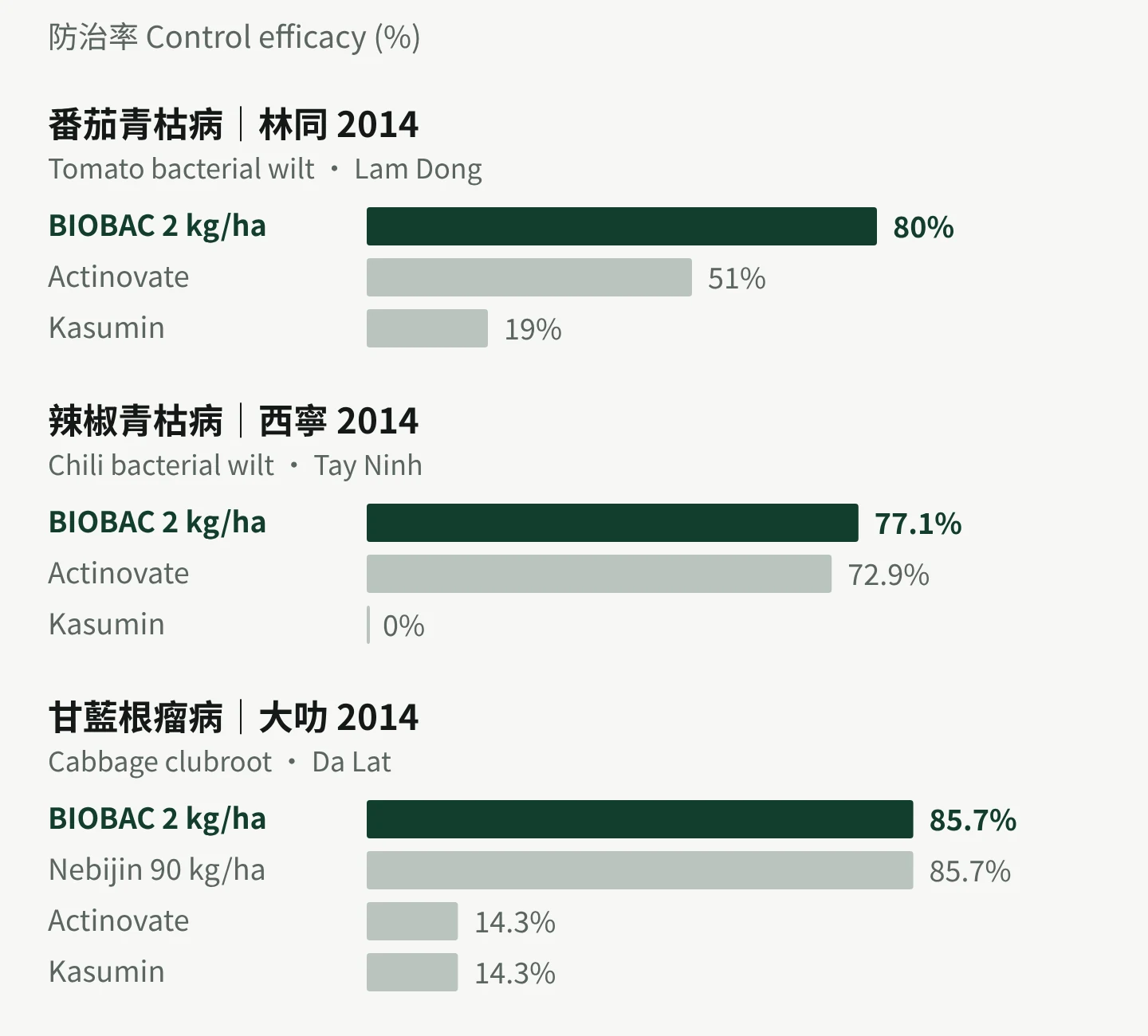
Source: Arysta Vietnam 2014–2015 trial summary.
- Tomato bacterial wilt (Lam Dong): 80% control with BIOBAC 2 kg/ha, against 51% for Actinovate and 19% for Kasumin.
- Chili bacterial wilt (Tay Ninh): 77.1% control with BIOBAC 2 kg/ha; Kasumin gave none.
- Cabbage clubroot (Da Lat): 85.7% control with BIOBAC 2 kg/ha, matching the chemical Nebijin, with the same yield.
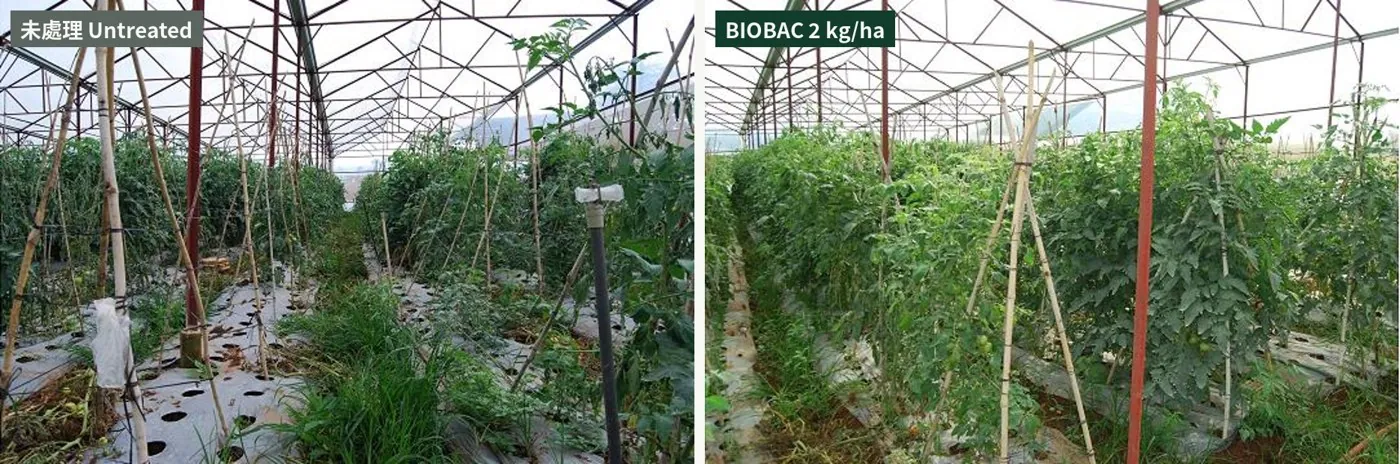
Greenhouse tomato, Lam Dong: wilting untreated (left), vigorous growth with BIOBAC 2 kg/ha (right).
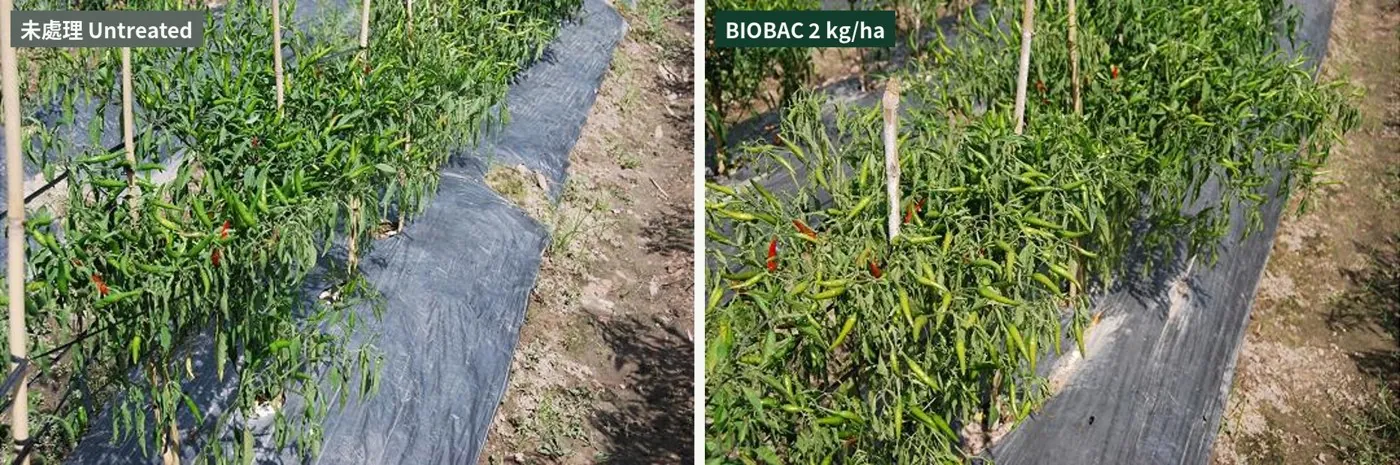
Chili, Tay Ninh, 28 days after the fourth application: untreated (left) and BIOBAC 2 kg/ha (right).
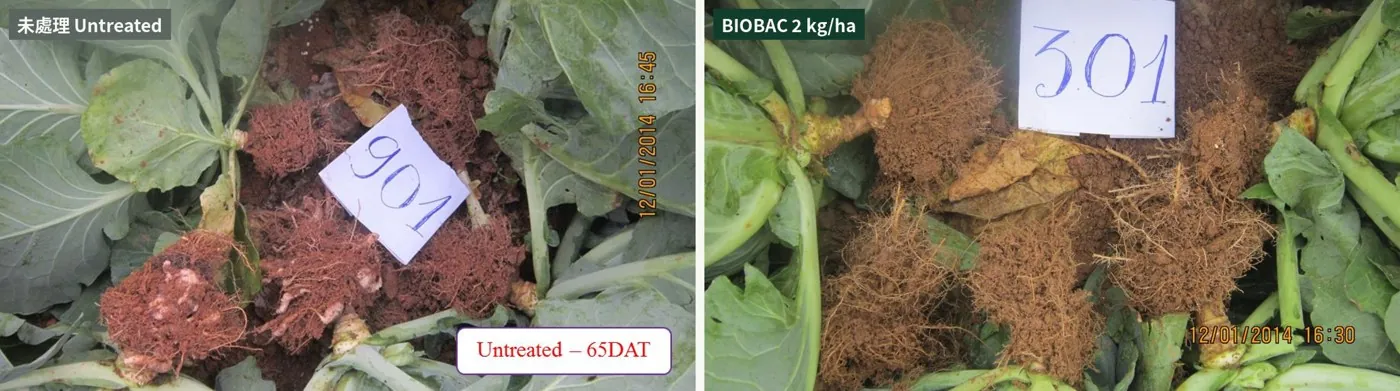
Cabbage, Da Lat, 65 days after transplanting: galled roots untreated (left), fine healthy roots with BIOBAC 2 kg/ha (right).
Nematode management
In a greenhouse tomato trial in Spain run to GEP standards by the independent provider Eurofins, Y1336 was among the top performers against root-knot nematodes.
| Trial | Rate | Result |
|---|---|---|
| Spain, Eurofins GEP, 2024–2025 | Biobac WP 3 kg/ha | Ranked 1st across 15 parameters; marketable yield +29.9%, the highest in the trial (p=0.05) |
| Spain, Eurofins GEP, 2025–2026 (two trials) | Biosol SC 4 L/ha | Ranked 3rd overall, ahead of most comparators; yield +12.8–23.3%, equal to or above the biological reference Nemguard |
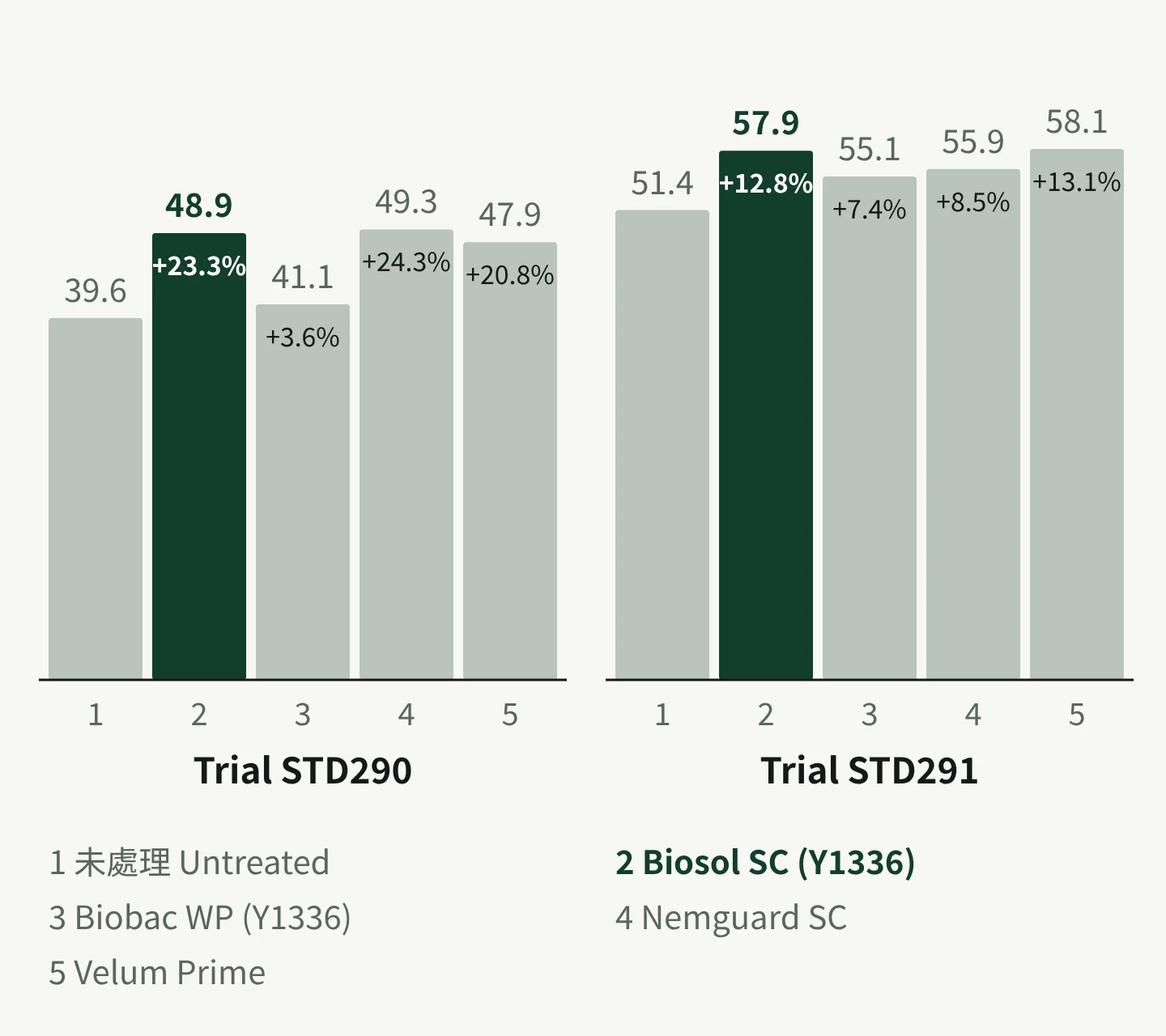
Two Eurofins GEP trials in Spain (2025–2026): Biosol SC raised tomato yield by 12.8–23.3%.
- Saprophagous and free-living nematodes were monitored throughout; impact on non-target beneficial nematodes was limited.
- Sites carried naturally high infestation, so results reflect real field conditions.
Growth promotion in the field
Beyond disease control, Y1336 helps crops grow more evenly with stronger roots.
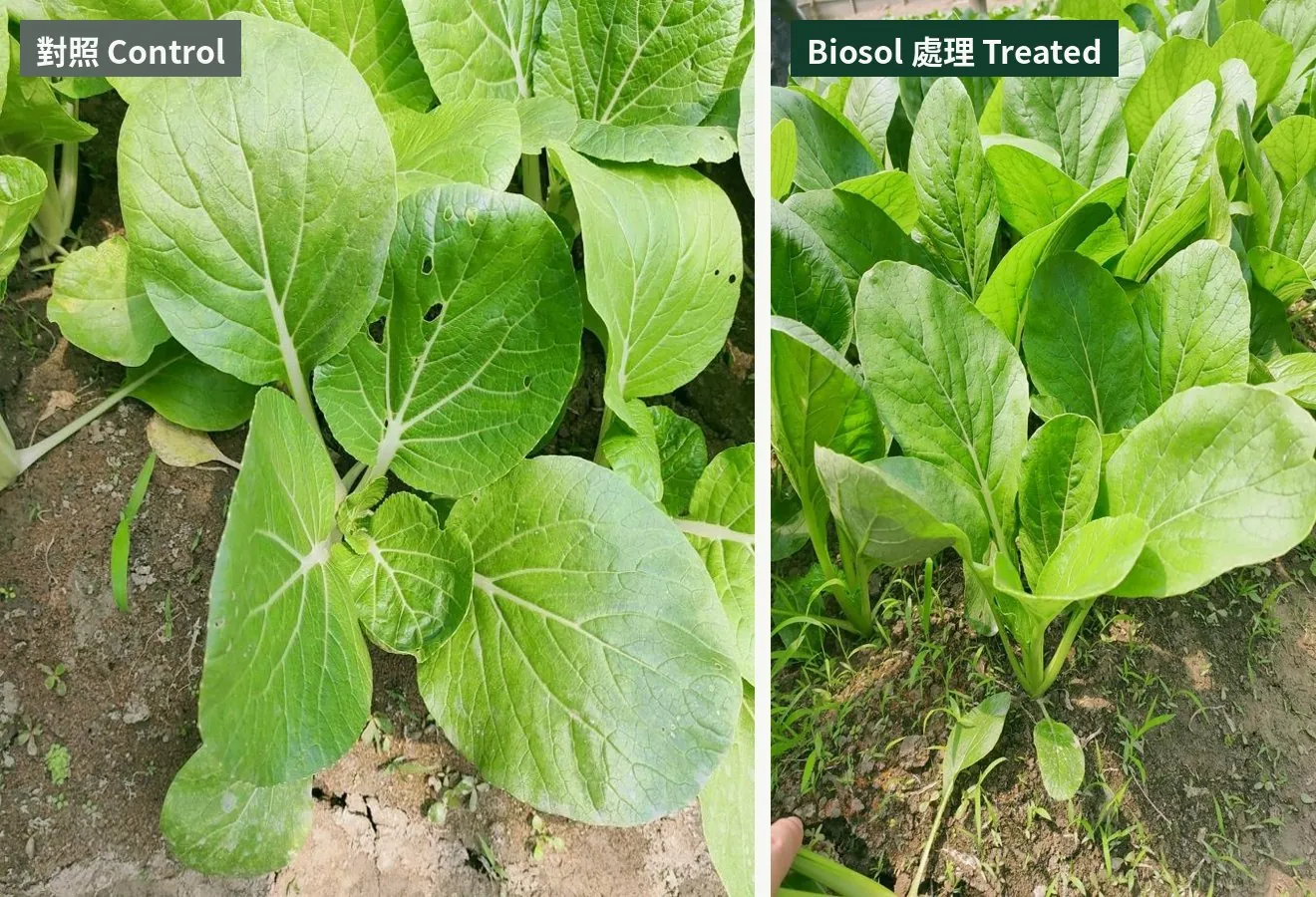
Organic greenhouse pak choi, Yunlin: Biosol at 400-fold gave more even plants, less disease, and greater height and leaf number than the control.
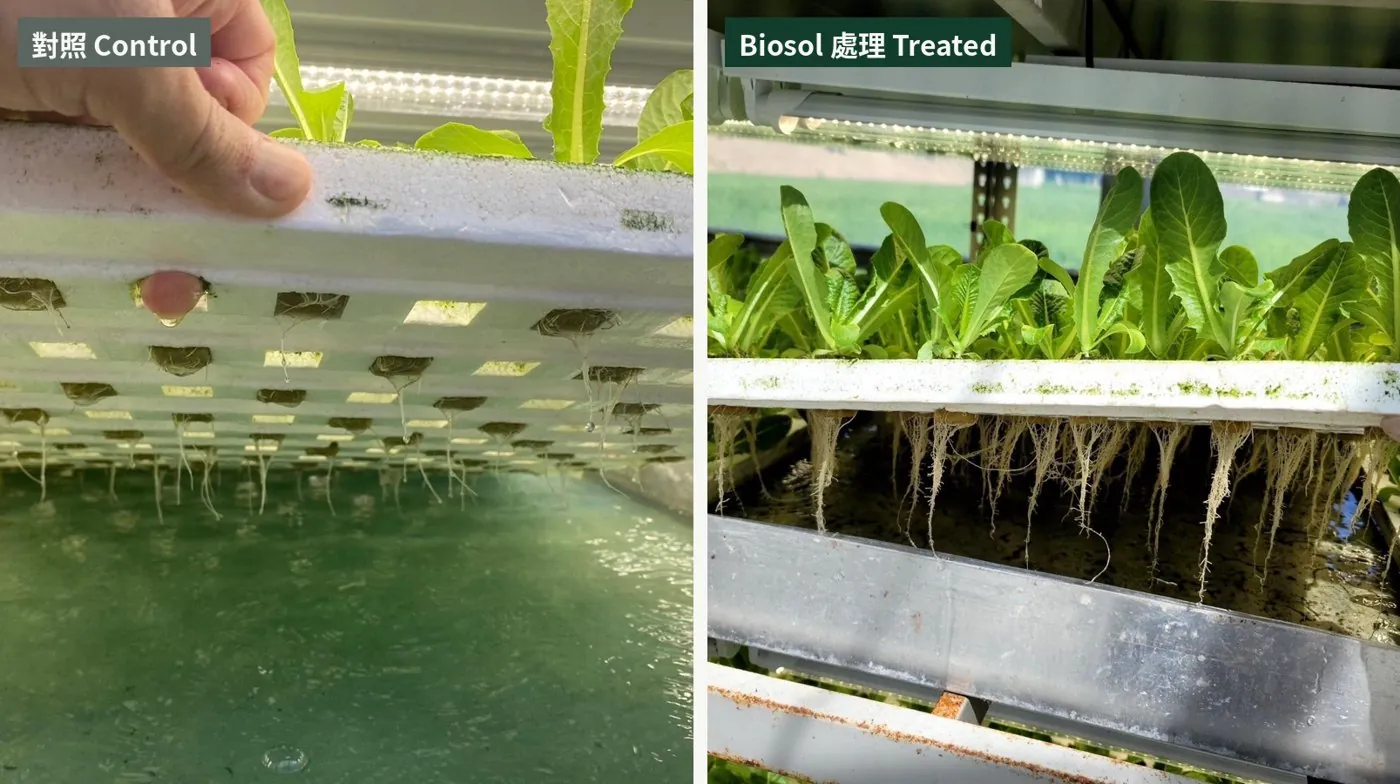
Hydroponic romaine lettuce, Miaoli: 1,000-fold Biosol in seedling trays and 1 L per tonne of water in the main pool gave clearly stronger roots.
Safe harvest and IPM rotation
Y1336 works best rotated with chemistry: use chemical products early to bring pathogen pressure down, then switch to Y1336 near harvest to keep crops protected without residue concerns.
Why it suits use before harvest
- Turkish grape and cherry trial reports state a pre-harvest interval of 0 days.
- Chile’s registration for berry gray mold starts applications 7 days before harvest and allows use up to the day before harvest.
- No phytotoxicity was observed in any treatment in trials in Vietnam, Indonesia and Taiwan.
Vietnam: steady control used on its own
In high-pressure field trials in Vietnam, BIOBAC at 2 kg/ha used alone:
- controlled citrus scab, tomato late blight and chili anthracnose by 52–54%;
- reduced cucumber downy mildew severity from 26.1% to 18.6%;
- controlled citrus canker by 46.2%, slightly above mancozeb.
The recommended approach is therefore to pair it with chemical products: use Y1336 at early disease or before harvest to cut the number of chemical sprays.
Thailand IPM demonstrations (2015–2017)
- Strawberry: better anthracnose control than farmer practice.
- Tomato: alternated with chemical products, effectively controlled bacterial wilt.
- Chinese kale: better disease control than farmer practice, with pesticide costs down 20%.
- Banana: less disease, sturdier plants and longer post-harvest shelf life.
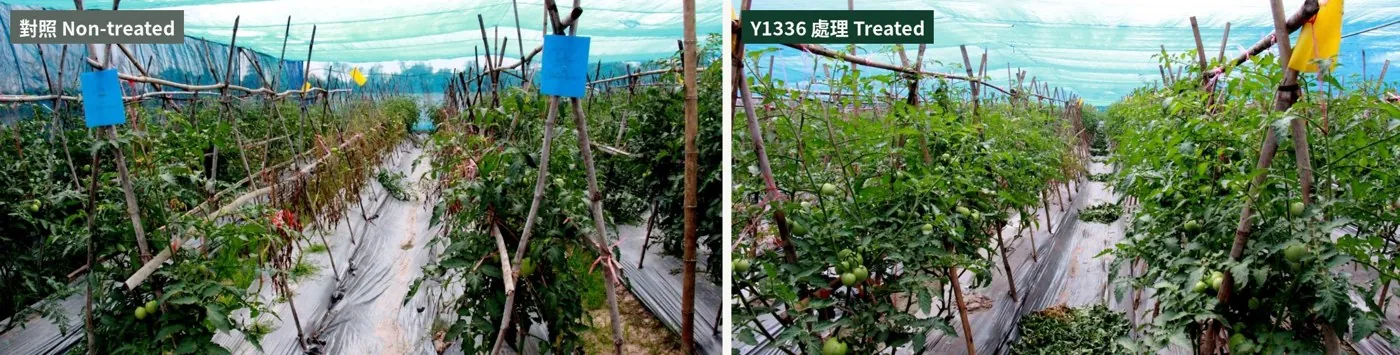
Tomato demonstration, Thailand: severe bacterial wilt untreated (left); plants alternating Y1336 with chemical products stayed healthy (right).
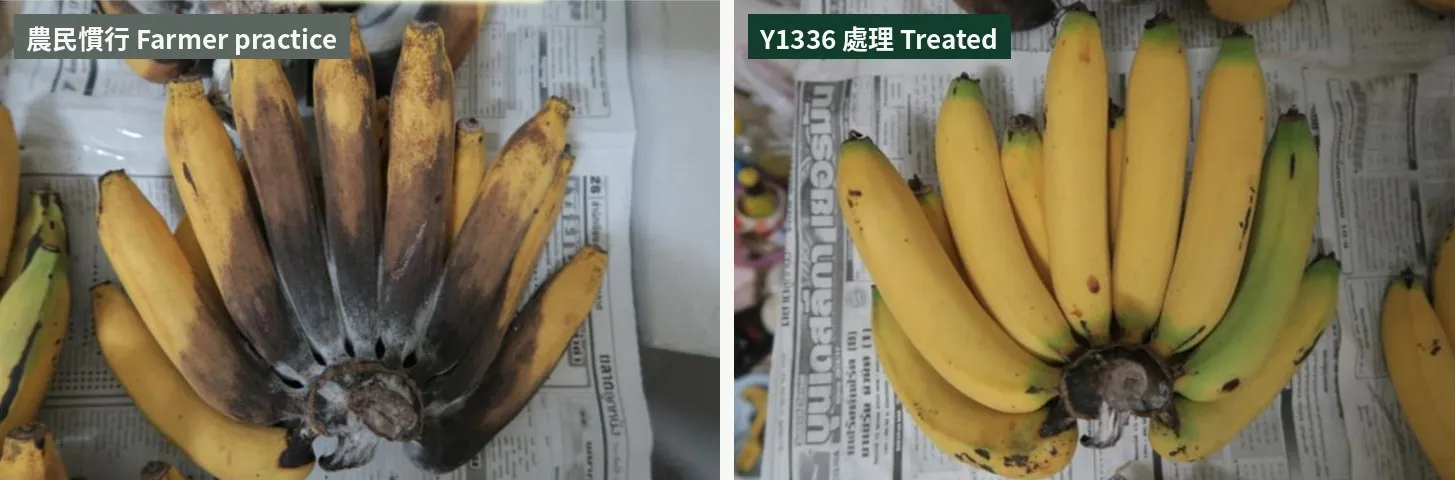
Banana demonstration, Thailand, 17 days after harvest: farmer practice (left) and Y1336 treated (right).
Organic use: certified as an input for organic agriculture in Taiwan, under USDA NOP (BCS) and by IBD in Brazil (including EU, JAS and Canadian standards); certificates are renewed annually.
Registrations
Y1336 is registered in 15 countries; registered crops and diseases follow each country’s label.
| Region | Countries |
|---|---|
| Asia | Taiwan, Japan, China, Korea, Vietnam, Thailand, the Philippines, Indonesia, Myanmar |
| Americas | Brazil, Chile |
| Middle East and Africa | Turkey, Morocco, Tunisia, Kenya |
Japan: greenhouse air-duct application
In Japan, Y1336 is also registered for greenhouse air-duct application against tomato gray mold. The dry spore powder is fed by machine into the greenhouse air ducts without dilution, and air circulation spreads it evenly over leaves and fruit, saving labor. This required powder finer than 325 mesh (44 µm). See Greenhouse air-duct application in Japan.
Formulations, specifications and shelf life
| Product | Formulation | Viable count | Shelf life |
|---|---|---|---|
| BIOBAC | Wettable powder (WP) | ≥1×10⁹ CFU/g | 3 years at room temperature |
| BIOSOL | Liquid, SC (SL) | ≥1×10⁹ CFU/mL | 2 years |
Storage stability (BIOBAC)
Y1336 exists as endospores, which tolerate heat and storage.
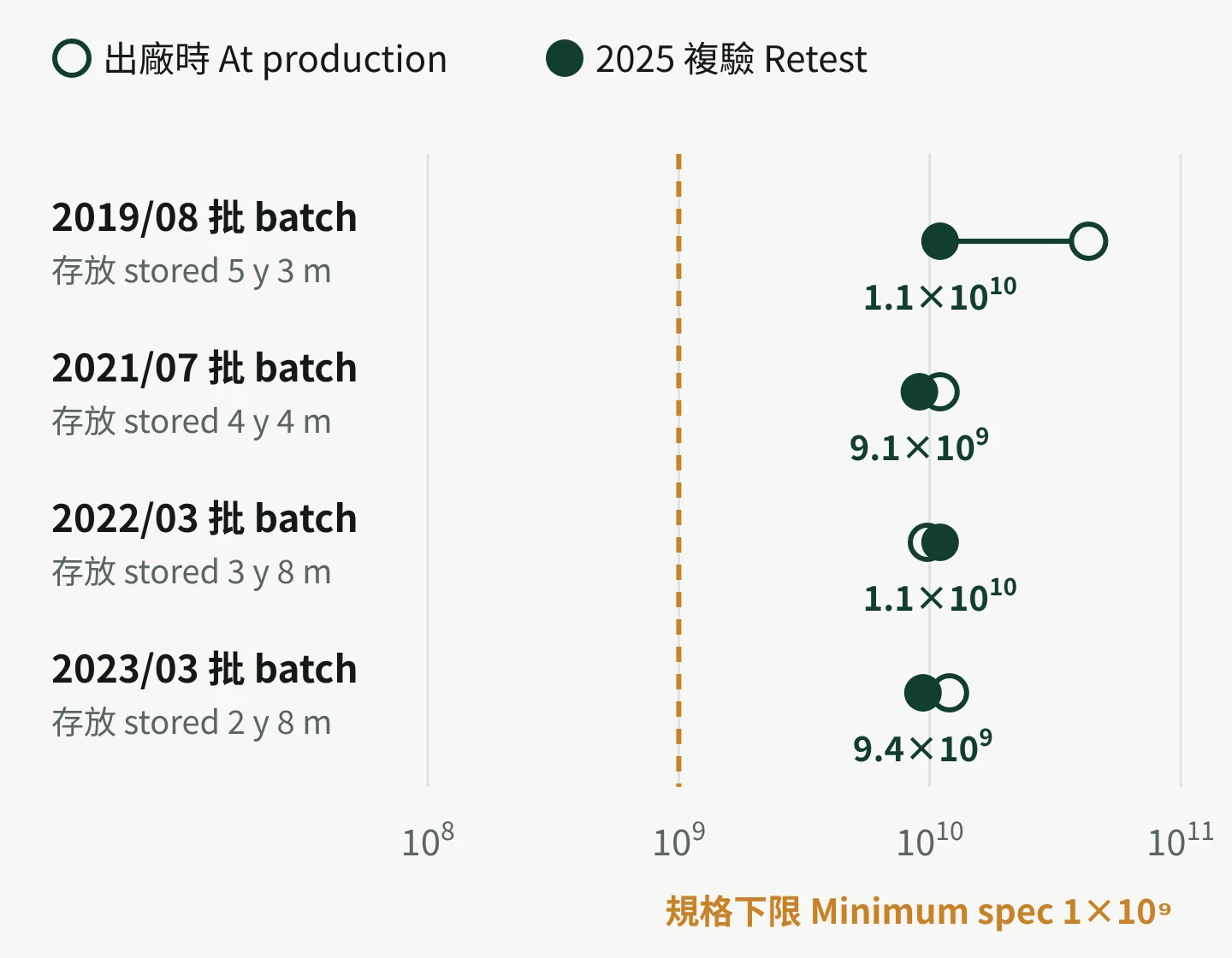
Retained samples stored 2 years 8 months to 5 years 3 months still held ten times the specification in 2025.
Other storage tests:
| Test | Conditions | Result (CFU/g) |
|---|---|---|
| Expired-sample retest | Produced 2004, tested 7 years after expiry | 5.75×10¹⁰ |
| Accelerated heat test | 50°C for 8 weeks | Held at the 10¹⁰ level |
| Cold and room temperature | 4°C and room temperature, 3 years each | Held at the 10¹⁰ level |
Quality control: every batch passes 7 QC checks, including colony morphology, DNA identification and tests for 4 pathogens (such as E. coli and Salmonella).
Tank mixing and use
Japan’s National Agriculture and Food Research Organization (NARO) and Arysta tested 96 pesticides on cucumber leaves; 88 had little effect on Y1336 survival. Most common products can be used alongside Y1336.
Leaf-surface test: 88 of 96 pesticides had little effect
Y1336 wettable powder was mixed with each pesticide at its Japanese registered concentration, dropped onto cucumber leaves and incubated for one week before Y1336 counts were measured.
- Only 8 products markedly reduced Y1336 survival:
- Below 10% survival: cyazofamid and flonicamid.
- 10–20% survival: fluazinam, mancozeb, propineb, captan, chinomethionat and hexythiazox.
- The other 88 had little effect, including kasugamycin, oxytetracycline, validamycin and basic copper sulfate, which are used against bacterial diseases.
- Many products that inhibit Y1336 on agar had little effect on leaves, so agar tests alone understate how widely Y1336 can be combined.
Source: Kubota M., Chiba M., Yamanaka S. and Sekiguchi M. (2026). Sensitivity of a bio-fungicide component, Bacillus subtilis strain Y1336, to chemical pesticides on cucumber leaves. Annual Report of the Kansai Plant Protection Society 68: 102–107.
Biontech laboratory tests
- Etridiazole, fosetyl-aluminium and metalaxyl can be mixed.
Precautions
- Follow the Taiwan label: do not mix directly with copper products or antibiotics.
- Apply the 8 products above a few days apart from Y1336 rather than tank-mixing.
- Some insecticides and herbicides (dimethoate, fenthion, abamectin, paraquat, glufosinate) and micronutrient fertilizers containing zinc or copper inhibited Y1336 in Biontech’s agar tests; apply them separately as well.
Use recommendations
- Start preventively or at the first sign of disease; apply every 7–10 days for 3–4 applications.
- Add a spreader for foliar use.
- Apply in the early morning or evening.
- Use up promptly once opened.